LTRAS -- "The World's Youngest 100-year
Experiment"


UC Davis's Long Term Research on
Agricultural Systems project has been evaluating the sustainability and
environmental impact of conventional & alternative agriculture
since
1993.
June 2004 Listening Session
Year 12 Assessment & Planning Process
Report of LTRAS Review
Team,
May
2002
Sponsors
Visiting LTRAS
Staff email & phone numbers
Overview
Our 10 cropping systems
Newsletters & Publications
More pictures
(most
are clickable)
Research opportunities at LTRAS
Research Authorization Request
LTRAS
weather
graph(Project
REMOTE)
LTRAS database input and retrieval
Overview
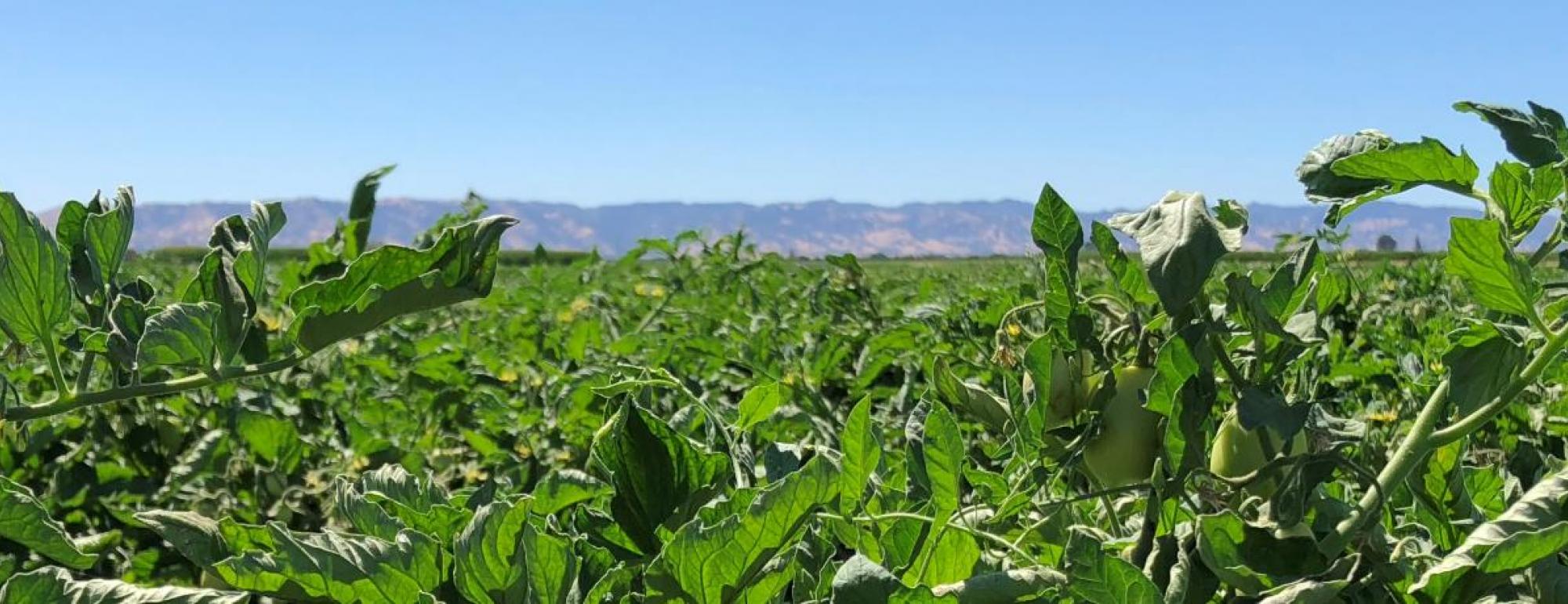
The Center for Integrated Farming Systems (CIFS) at Russell Ranch near the UC Davis campus is the location of a long-term, cropping systems comparison and various shorter-term experiments, all focused on improving the sustainability and environmental impact of agriculture. The long-term experiment (called LTRAS or Long Term Research on Agricultural Systems) was inspired by results from other long-term experiments showing that short-term trends can be poor predictors of long-term sustainability.
The primary objective of this project is to understand the relationships between sustainability and external inputs. The 10 cropping systems in the main experiment differ mainly in how much irrigation water or fertilizer (particularly nitrogen) is used. One system follows organic farming guidelines and several include nitrogen-fixing legume cover crops. Sustainability will be determined from long-term trends in yield, profitability, efficiency in use of limited resources (such as water or energy), and environmental impact, such as leaching of nitrate or pesticides. Changes in key soil properties, such as organic matter, weeds, pH, salinity, and economic indicators are monitored to see whether any of these are good predictors for long-term sustainability. Long-term research is an essential part of the College of Agricultural and Environmental Sciences commitment to agricultural sustainability (“Why Long Term Research").
While acting as an "early warning system" to detect gradual but potentially harmful long-term trends, the project also provides important short-term contributions to agricultural science at the CIFS. An important example is the recent decision by the Sustainable Agriculture Farming Systems (SAFS) team to relocate to the LTRAS site to carry out research on how reduced tillage practices might be incorporated into conventional, organic, and low-input approaches. New projects being discussed include work on other types of farming systems in California including: dairy-forage systems, market gardening, woody perennials like orchards and vineyards, restoration ecology, and bio-fuels production. Currently, plans are being made to improve the current cropping system mix in the core, long-term experiment (CIFS Overview). The CIFS is primarily a research facility, but we also contribute to U. C. Davis’ extension and teaching missions by hosting field days, class field trips, undergraduate interns and graduate student research.
LTRAS Staff
- Steve Kaffka (LTRAS Director) srkaffka *
- Dennis Bryant (Associate Director) dcbryant *
- Israel Herrera (Agricultural Technician) igherrera *
* add @ucdavis.edu to email addresses above.
- LTRAS Facility phone number: 757-3162
- LTRAS facility fax: 757-3158
Major current supporters of research at LTRAS include:
Those who provided significant support to help us get started include:
LTRAS Newsletters
We recommend downloading the newsletters as PDF files, which can be
viewed
or printed using Adobe Acrobat
Reader
Web (HTML) versions of some issues are also available, but may differ
from
PDF versions.
Some other publications based on research at (or samples from)
LTRAS
- Kong, A.Y., J. Six, D.C. Bryant, R.F. Denison, and C. van
Kessel. 2005. The relationship between carbon input, aggregation,
and soil organic carbon stabilization in sustainable cropping
systems. Soil Science Society of America Journal (in press).
- Denison, R.F., D.C. Bryant, and T.E.
Kearney. 2004. Crop
yields over
the
first
nine years of LTRAS, a long-term comparison of field crop systems in a
Mediterranean climate. Field
Crops Research 86:267-277.
- Martini, E.A., J.S. Buyer, D.C. Bryant, T.K. Hartz, and R.F.
Denison. 2004. Yield
increases during the organic transition: improving soil quality or
increasing
experience? Field
Crops Research 86:255-256.
- Okano, Y., K.R. Hristova, C. Leutenegger, L. Jackson, R.F.
Denison, B.
Gebreyesus, D. LeBauer, and K.M. Scow. 2004. Effects of ammonium on the
population
size of ammonia-oxidizing bacteria in soil -- Application of real-time
PCR. Applied
and
Environmental Microbiology 70:1008-1016.
- Tuli, A., K. Kosugi, and J.W. Hopmans. 2001. Simultaneous
scaling of water
retention and unsaturated hydraulic conductivity functions assuming
lognormal
pore-size distribution. Advances in Water Resources 24:677-688.
- Timm, L., Pearson, D., and Jaffee, B. 2001. Nematode-trapping
fungi in
conventionally- and organically-managed corn-tomato
rotations. Mycologia 93:25-29
- Hasegawa, H.,
D.C. Bryant,
and R.F. Denison. 2000. Testing CERES model predictions of crop growth
and N dynamics, in cropping systems with leguminous green manures in a
Mediterranean
climate. Field Crops Res. 67:239-255.
- Hasegawa, H.,J.M. Labavitch, A.M. McGuire, D.C. Bryant, and
R.F. Denison.
1999. Testing CERES model predictions of N release from legume cover
crop
residue. Field Crops Res. 63:255-267.
- Lundquist, E.J., L.E. Jackson, and K.M. Scow. 1999. Wet/dry
cycles affect
dissolved organic carbon in two California agricultural soils. Soil
Biol.
Biochem. 31:1031-1038.
- Devêvre OC and WR Horwath. 1999. Soil Humic Fractions as
Indicators
of the Transition from Conventional to Low-Input-Organic Farming
Systems:
Evaluation of SOM Maintenance. International Humic Society, Brisbane,
Austrailia.
September 1998.
- Kosugi, K., and J.W. Hopmans. 1998. Scaling of soil water
retention curves
for soils with a lognormal pore size distribution. Soil Sci. Soc. Amer.
J. 62:1496-1505.
- McGuire, A.M., D.C. Bryant, and R.F. Denison. 1998. Wheat
yields, nitrogen
uptake, and soil moisture following winter legume cover crop vs.
fallow. Agron.
J. 90:404-410.
- Phillips, D. A., C.M. Joseph, and P.R. Hirsch. 1997. Occurrence
of flavonoids
and nucleosides in agricultural soils. Appl. Environ. Microbiol.
63:4573-4577.
- Heike Clausnitzer and Michael J. Singer. 1997. Intensive land
preparation
emits respirable dust. Calif. Agric. 51(2):27-30
- Denison, R.F., and R. Russotti. 1997. Field estimates of green
leaf area
index using laser-induced chlorophyll fluorescence. Field Crops Res.
52:143-150.
- Denison, R.F. 1997. Review of "Long-Term Experiments in
Agricultural and
Ecological Sciences." Field Crops Res. 54:74-75.
- Denison, R.F., R.O. Miller, D. Bryant, A. Abshahi, and W.E.
Wildman. 1996.
Image processing extracts more information from color infrared aerial
photos.
Calif. Agric. 50(3):9-13
- Jiayu Chen, Jan W. Hopmans, and Graham E. Fogg. 1995. Sampling
design for
soil moisture measurements in large field trials. Soil Sci. 159:155-161
Related Web Sites
Interested in doing research at LTRAS?
We welcome additional collaborators from UC Davis or elsewhere. In
addition
to providing a predictable field research environment representing a
wide
range of cropping systems: irrigated
and nonirrigated, conventional and alternative, we have extensive
collections
of archival plant and soil samples (including, for example, plant and
soil
samples from 1993, the uniformity trial year before treatments began),
detailed records on crop management each year, extensive databases,
etc.
We are currently implementing a new telemetry system, allowing access
to
instrumentation at LTRAS (starting with our on-site weather station)
via
the Web, as part of the REMOTE project.
Nondestructive or minimally destructive sampling is approved
routinely.
To protect the interests of other current and future researchers (92
years
to go!), research requiring nonuniform treatments within plots, removal
of large-diameter soil cores, use of stable isotopes, etc., should be
proposed
at least one month ahead of time, to allow time for the Executive
Committee
to meet and discuss. Submit your request using our web-based Research
Authorization Request form and/or contact Steve Kaffka.
Official policies regarding research at LTRAS, data sharing,
etc.,
are set forth in the LTRAS
Charter
To comply with the federal Worker
Protection Standard, anyone working in the LTRAS plots must have
the
required training certificate on file. The training takes 30 minutes,
is
good for 5 years, and is offered by most departments in the College of
Agriculture &Environmental Sciences. Documentation of training may
be faxed to LTRAS at 757-3158.
Minutes of some important LTRAS meetings
- Executive
Committee, 4
April 98
- General
Committee, 23 July
98
- Executive
Committee,
24 May 00
Weather Data
View recent LTRAS
weather data -- via Project REMOTE radiotelemetry!
A Graph of temperature and
solar
radiation at LTRAS from yesterday & today
LTRAS weather data from previous years |
2001| 2000|
1999| 1998|
1997| 1996|
1995 |
This web page is hosted as LTRAS.ucdavis.edu by the Department of
Agronomy
and Range Science at http://agronomy.ucdavis.edu/LTRAS/ and maintained
by Ford Denison.